
Temporary Email for QA Testing
A Complete Guide for Developers and Quality Assurance Teams
Quality Assurance (QA) testing is a foundational stage of modern software development. It ensures that applications function correctly, securely, and reliably before reaching end users. One of the most frequently tested — and most frequently overlooked — components of applications is email-based functionality.
From user registration and password recovery to notifications and billing confirmations, email workflows are central to nearly every web application, SaaS product, or mobile app.
Testing these workflows effectively requires a flexible, scalable, and reliable solution.
That solution is temporary email.
In this comprehensive guide, we’ll explore how temporary email improves QA testing processes, how to implement it in development environments, and how to maximize efficiency while maintaining security and privacy.
This guide is written for beginner and intermediate QA testers, developers, and product teams who want to improve their email testing strategy.
What Is Temporary Email?
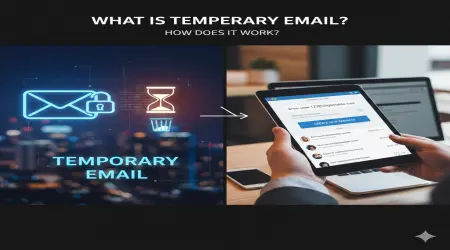
Temporary email (also called disposable email or burner email) is a short-lived email address that can receive messages without requiring permanent account registration.
These inboxes:
Are created instantly
Require no identity verification
Expire automatically
Do not retain long-term data
Are designed for short-term communication
In QA testing, temporary email provides disposable identities for simulating real users.
Why Email Testing Is Critical in QA
Email is more than just a communication tool — it is often deeply integrated into application logic.
Common email-dependent features include:
Account verification
Password reset
Two-factor authentication
Transaction confirmations
Subscription management
Feature notifications
User invitations
If email workflows fail, users may be unable to access accounts, complete purchases, or secure their profiles.
QA teams must thoroughly validate these processes.
The Challenges of Testing Email Workflows
Testing email workflows with traditional email accounts presents several challenges:
Limited number of available test inboxes
Manual account creation
Inbox clutter from repeated tests
Spam filtering interference
Account reuse conflicts
Data privacy concerns
These issues slow down QA cycles and introduce inconsistencies.
Temporary email addresses eliminate these problems.
Why Temporary Email Is Ideal for QA Testing
Temporary email improves testing efficiency in several measurable ways.
Unlimited Unique Test Accounts
Each test scenario can use a new disposable address.
This allows QA testers to repeatedly test:
User registration
Account activation
Email confirmation
Password recovery
No address conflicts occur.
Clean and Isolated Test Environments
Disposable inboxes contain only messages relevant to a single test.
There is no contamination from previous workflows.
This improves accuracy and reproducibility.
Automation-Friendly Infrastructure
Temporary email services often allow automated inbox retrieval.
This supports:
End-to-end testing
CI/CD pipeline validation
Regression testing
Automated QA frameworks
Privacy Protection
QA teams avoid using real employee or personal email addresses.
This reduces privacy risks and ensures testing environments remain isolated.
Common QA Testing Scenarios Using Temporary Email
Temporary email plays a role in nearly every application lifecycle.
User Registration Testing
QA teams validate:
Email verification links
Duplicate account prevention
Token expiration
Activation redirects
Temporary email allows repeated onboarding simulations.
Password Reset Testing
Security-focused testing requires validation of:
Reset email delivery
Token integrity
Expiration handling
Single-use enforcement
Disposable inboxes support isolated password recovery scenarios.
Transactional Email Testing
Applications often send automated messages such as:
Order confirmations
Billing receipts
Subscription renewals
Account updates
QA must confirm correct content and timing.
Role-Based Access Testing
Systems with multiple roles require unique email identities.
Examples:
Admin accounts
Moderator accounts
Member accounts
Guest accounts
Temporary email simplifies role simulation.
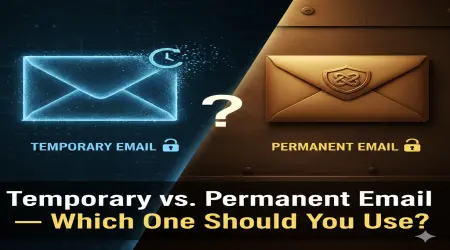
Temporary Email vs Real Email in QA Testing
A comparison highlights the advantages.
| Feature | Temporary Email | Real Email |
|---|---|---|
| Setup time | Instant | Manual |
| Inbox management | Automatic expiration | Ongoing maintenance |
| Scalability | Unlimited | Limited |
| Automation support | High | Limited |
| Privacy exposure | Low | Higher |
| Test isolation | Excellent | Limited |
For QA environments, disposable email is more efficient and scalable.
Step-by-Step: Testing Email Workflows in QA
A structured process ensures consistent results.
Step 1 — Generate a Temporary Address
Create a fresh disposable email for each test case.
This simulates a new user.
Step 2 — Trigger Application Action
Perform the action that generates an email:
Register account
Request password reset
Subscribe to service
Step 3 — Validate Email Delivery
Confirm:
Email arrives
Correct recipient
No delivery delays
Step 4 — Inspect Email Content
Verify:
Subject line accuracy
Sender address
Branding and formatting
Dynamic personalization fields
Step 5 — Test Interactive Elements
Most emails include:
Confirmation links
Reset buttons
Activation URLs
Ensure these function correctly.
Step 6 — Confirm System Behavior
After clicking links, verify:
Account activation
Password change success
Subscription update
Step 7 — Repeat with Edge Cases
Test scenarios such as:
Expired tokens
Multiple reset requests
Rapid repeated signups
Disposable email allows easy repetition.
Automation in QA Using Temporary Email
Modern QA processes rely heavily on automation.
Temporary email can integrate with:
Selenium
Cypress
Playwright
Puppeteer
CI/CD pipelines
Typical automated workflow:
Generate temporary email
Trigger action
Retrieve email programmatically
Extract link
Continue test
This supports complete lifecycle testing.
Security Implications in QA Testing
Testing email workflows also strengthens application security.
Token Validation
Temporary email helps verify:
Link expiration
Single-use enforcement
URL integrity
Abuse Simulation
QA can simulate:
Multiple account creation
Rate-limit bypass attempts
Invitation abuse
This improves resilience.
Sensitive Data Awareness
Some disposable inboxes may be public.
Sensitive production data should never be sent during testing.
Privacy and Compliance Considerations
Temporary email aligns with privacy-first testing practices.
Benefits include:
Reduced personal data use
Lower compliance risk
Cleaner test environments
GDPR-conscious workflows
Testing without real user data improves compliance posture.
Real-World QA Example: SaaS Onboarding Flow
Testing process:
Generate disposable email
Register new account
Confirm verification email
Activate account
Trigger welcome email
Test password reset
Cancel account
Repeat test
This process can run dozens of times without manual inbox management.
Advanced QA Strategies Using Temporary Email
Experienced QA teams use disposable email for:
Load testing registration systems
Testing global email delivery
Localization validation
Spam filter behavior testing
A/B testing email content
Temporary email enables scalable experimentation.
When Not to Use Temporary Email in QA
Disposable email is not suitable for testing:
Long-term engagement tracking
Persistent user history
Legal documentation workflows
Archival compliance requirements
Permanent email accounts may be required in those cases.
Best Practices for QA Teams
To maximize effectiveness:
Always use isolated testing environments
Document email triggers and expected behavior
Validate both HTML and plain-text versions
Test across multiple devices and clients
Monitor email performance metrics
Temporary email supports structured QA methodology.
How Temporary Email Improves Software Quality
Thorough email workflow testing leads to:
Higher onboarding success rates
Reduced support tickets
Improved user trust
Better security validation
Reliable communication systems
Strong email workflows directly affect user retention and conversion.
Conclusion: Why Temporary Email Is Essential for QA Testing
Temporary email is a powerful and scalable solution for testing email-dependent workflows in modern applications.
It enables:
Rapid identity creation
Automation-friendly infrastructure
Clean and isolated test environments
Improved privacy and compliance
Enhanced security validation
For QA teams and developers, disposable email is not just a convenience — it is a critical tool for delivering reliable software.
Actionable Takeaways
To integrate temporary email into QA testing:
Use disposable addresses for all onboarding tests
Automate email retrieval within test frameworks
Validate content formatting and functionality
Test edge cases and token expiration
Simulate abuse scenarios for security validation
Protect sensitive data in non-production environments
Include email workflow testing in CI/CD pipelines
By incorporating temporary email into your QA strategy, you create a more efficient, secure, and scalable testing environment.
Temporary email is a foundational tool for modern quality assurance processes.